
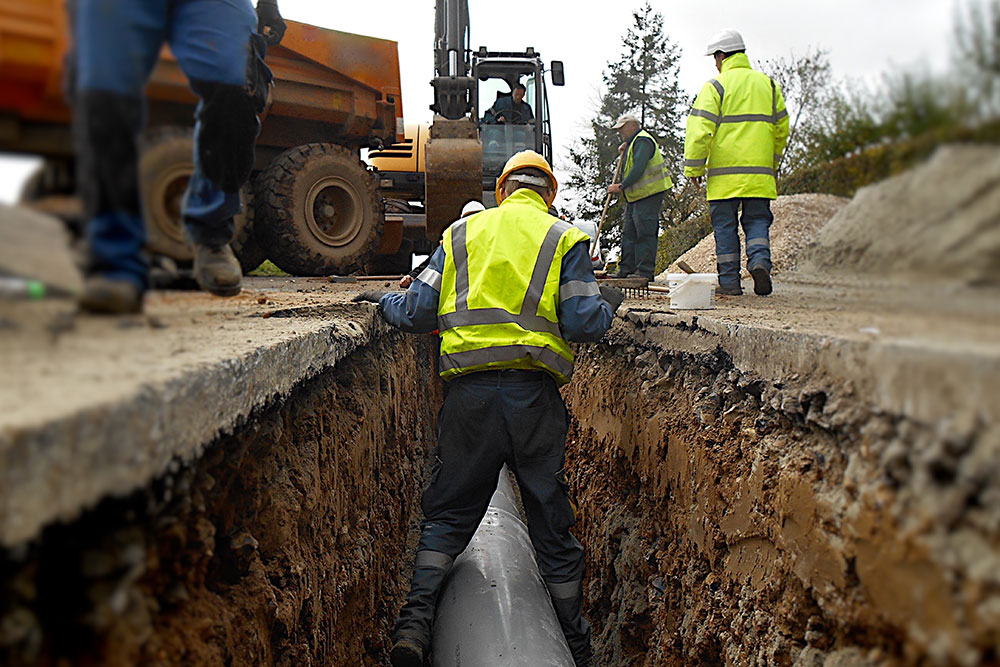
Trenches and excavations carry a high risk of collapse, injury from underground services, and other hazards that can be fatal.
If your team is working near or inside an excavation, there’s no room for shortcuts. Here’s a practical reminder of essential safety tips every worker should follow before breaking ground.
Know the Legal Framework
In Australia, excavation work is regulated under:
✔️ Model WHS Regulations
✔️ Work Health and Safety Act 2011 (Cth)
✔️ Codes of Practice for Excavation Work, Construction Work, and Managing the Risk of Falls
These set out responsibilities for PCBUs, principal contractors, and workers. A competent person must assess the site, identify hazards, and implement control measures. As a worker, your duty is to follow safe systems of work, report hazards, and use the right equipment properly.
Before You Start
🔹 Read the risk assessment. It must cover trench support, access points, nearby services, and fall prevention. Conditions change fast, so this document must be reviewed regularly.
🔹 Check the excavation. Inspections should happen at the start of each shift and after rain, vibrations, or partial collapses.
🔹 Know your escape. If the trench is deeper than 1.5 metres, there must be a safe way in and out—usually ladders, placed within 6m of workers and extending 1m above the surface.
Services? Assume They’re Live
Underground utilities like electricity, gas, water, and comms are serious hazards. Even if site plans are available, always assume services are live unless proven otherwise.
✔️ Use a cable locator before digging
✔️ Mark out known services clearly
✔️ Use hand tools within 500mm of any service
✔️ Never treat a damaged or exposed cable as safe
If you hit something unknown—stop immediately and report it.
Work Smarter With the Right Equipment
Use the least powerful equipment necessary to reduce risk:
⚠️ Excavators should only break surface where services are not present
⚠️ Power tools need 500mm clearance from utilities
✅ Hand tools should be used when exposing cables
✅ Always have a spotter when using machinery near a trench
Trench Support is Not Optional
Never enter an unsupported trench. The competent person will determine what’s needed based on soil, depth, and nearby loads:
- Trench boxes to shield workers
- Shoring to support trench walls
- Battering to slope trench sides
Even stable-looking excavations can collapse without warning. Report any movement and get out immediately.
Mind the Edge
Spoil heaps and machinery too close to the edge put pressure on trench walls. Always:
✅ Keep heavy equipment well clear
✅ Place spoil heaps at a safe distance
✅ Use barriers or stop blocks as needed
Backfill Correctly
When closing up, don’t cut corners. Backfill must be compacted in layers. Remove debris and large rocks. Watch for any signs of ground movement after completion.
Safety is a shared responsibility.
It starts with strong systems from above, but it’s what happens at ground level that saves lives.
Before you break ground, know the plan, check the site, and commit to following the safest way—not the fastest.